Why Umbria works for a ceremony
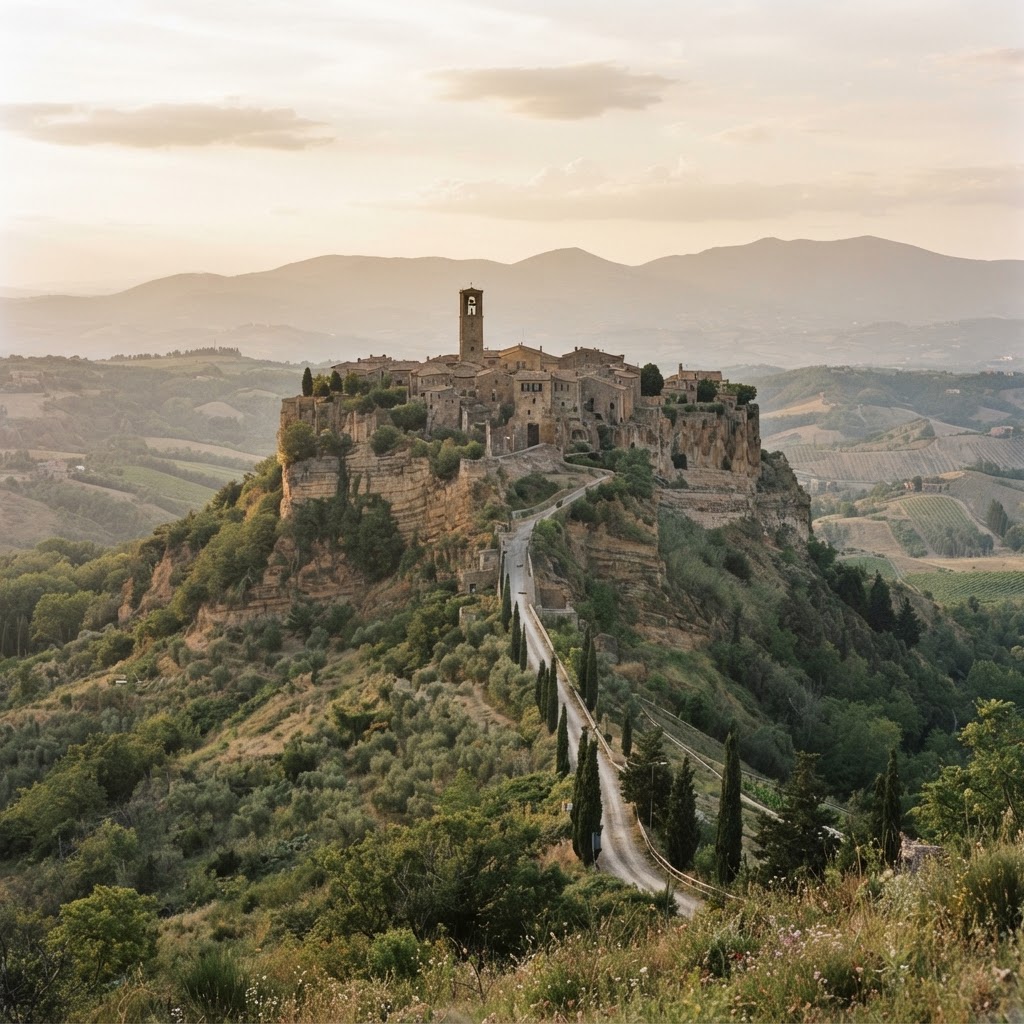
Umbria is what Tuscany was thirty years ago: green, unhurried, and full of medieval hill towns that have not been reorganised around visitors. It has no coastline, which is precisely the point. Couples come here for silence, stone, olive groves and long views, not for a postcard they have already seen. For a ceremony, that means privacy without isolation. You can hold a wedding in an abbey cloister or a castle courtyard and hear nothing but birds. If you want the landscape to do the talking and the guest list to stay modest, Umbria is hard to beat.
Where in Umbria
Assisi is the obvious name, and its stone and spiritual weight make a ceremony there feel serious and calm. Spoleto has a Roman theatre, a cathedral square and a slightly more worldly atmosphere, with the Valnerina's mountains and river gorges just behind it. Orvieto sits on a volcanic plateau above vineyards, with one of the most beautiful facades in Italy and cellars underneath the town. Todi and Perugia give you hill towns with real life in them. Lake Trasimeno is the quieter alternative for a waterside setting, with islands and soft evening light. The countryside between them is where most ceremonies actually happen: farmhouses, villas and converted monasteries with terraces looking across the valley.
The best time of year
Late May and June are the best of the year: green hills, long evenings and wildflowers still in the fields. September and early October are equally good, with the grape harvest and the first cool mornings. July and August are hot and dry, and the hill towns offer little shade at midday, so plan the ceremony for late afternoon. Late October and November bring the olive harvest, woodsmoke and truffles: beautiful, unpredictable, and wonderful if you love that mood. Winter is quiet and many countryside venues close. For a regional comparison across the whole country, see the month-by-month guide to marrying in Italy.
Ceremony settings that work
Abbey and monastery cloisters are Umbria's signature: stone arcades, a central well or garden, and acoustics that make a small choir sound enormous. Castle courtyards and tower terraces give drama with very little decoration. Farmhouse and villa terraces looking over olive groves are the practical choice for a relaxed ceremony, especially with children and older guests. Olive groves themselves are lovely for elopements, and the light through the leaves in late afternoon is the reason photographers love this region. Because a symbolic ceremony is not tied to an approved civil venue, all of these are open to you. The symbolic ceremony guide explains what that actually means in practice.
Getting there and moving around
Perugia has a small airport with a few European routes; most guests fly into Rome or Florence and drive or take the train up. Orvieto is on the Rome-Florence rail line and is genuinely easy without a car. The real logistics issue is the hill towns. Old centres are pedestrian, parking sits outside the walls, and some venues are reached by a final stretch of white road. Build in shuttles for the ceremony and warn guests about heels and cobbles. Distances look short on a map and take longer than you think, particularly at dusk.
Legal or symbolic in Umbria?
A symbolic ceremony in a cloister, a castle courtyard or an olive grove has no Italian civil-marriage paperwork and no requirement to use an approved venue. Most couples I marry here complete the legal marriage at home and keep the Umbrian ceremony for the celebration. If you want the marriage registered in Italy, the process follows the local comune and needs documents from your country, with the ceremony in Italian. The symbolic vs civil comparison and the paperwork guide for foreigners cover both paths.
What the ceremony feels like here
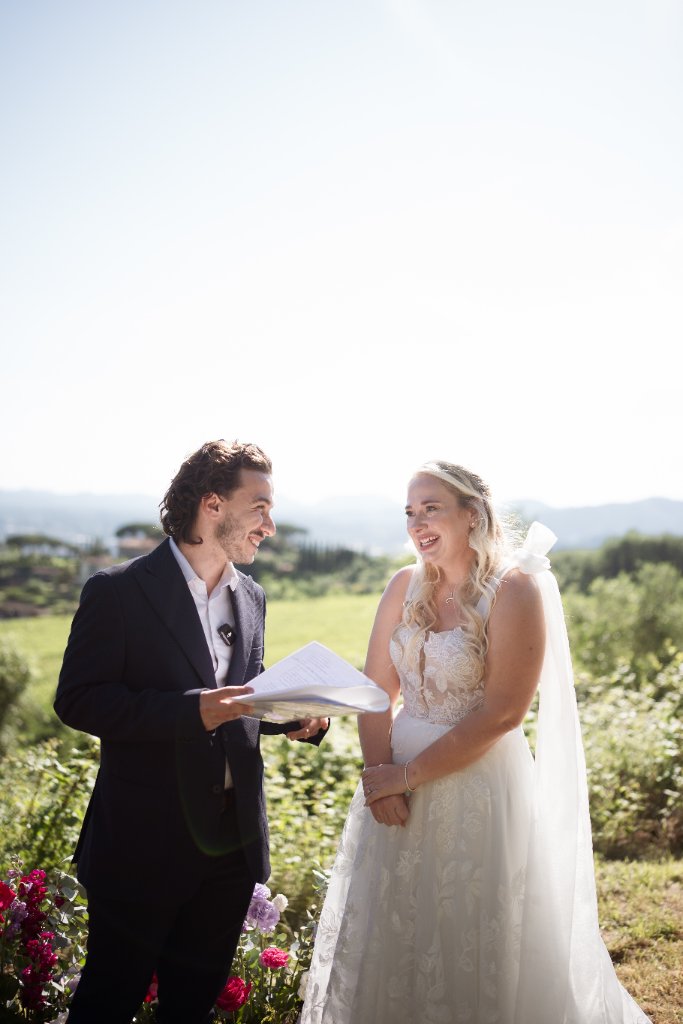
Umbrian ceremonies tend to be quiet and a little contemplative. The landscape invites longer silences, so the words have room to land. I often keep the structure lean: a welcome, your story, a reading that matters to you, vows, and a closing that lets the bells or the musicians take over. It is also a region where Italian guests will be moved by even a short passage in Italian, and where a bilingual ceremony feels natural. If you want help choosing readings, the wedding readings guide has options that suit stone rooms and open terraces.
Plan your Umbria ceremony
Tell me the season, the town or valley you are drawn to, and roughly how many guests you imagine, and I will show you how a ceremony could flow around the hills and the light. You can check availability here.