A symbolic ritual should feel meaningful, not gimmicky
There are hundreds of unity ceremony ideas online. Some are beautiful. Others can feel more like an activity than part of a wedding ceremony. For a destination wedding in Italy, I usually recommend choosing something simple, elegant and easy for guests to understand. A good ritual creates a pause in the ceremony and turns an idea - commitment, family, memory or two lives coming together - into something visible. One well-chosen ritual is usually stronger than adding several just because they look good in photographs.
The 12 symbolic rituals I would genuinely recommend for a wedding in Italy
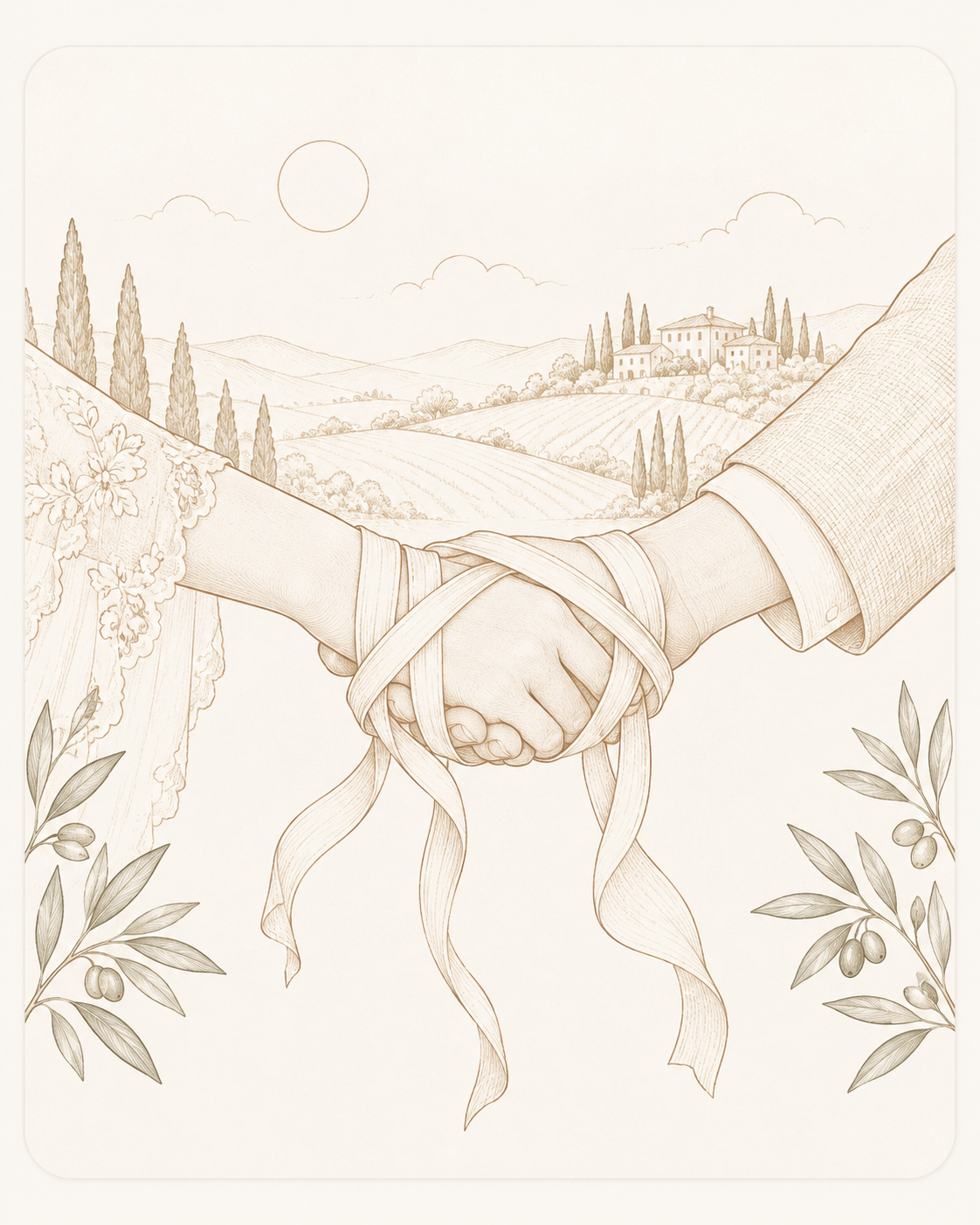
Handfasting
Your hands are gently bound with cords or ribbons while words or promises are spoken. It is rooted in Celtic tradition and works particularly well in symbolic ceremonies because it is intimate, visual and easy to personalize. At the end, the couple can even pull the cords into a knot - literally tying the knot.
Wine Ceremony
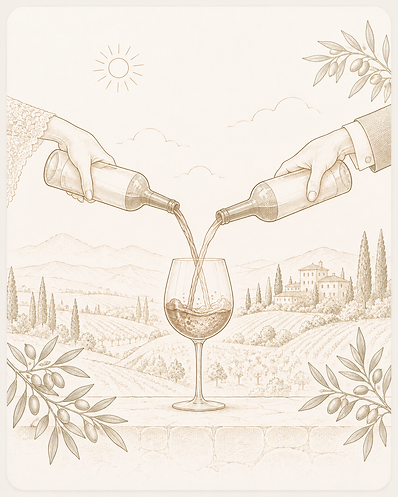
Each partner pours wine into a shared glass, or the couple simply shares one meaningful bottle together. In Tuscany, Piedmont, Veneto and other wine regions this feels completely at home. The wine can come from the venue, a favourite vineyard or somewhere connected to the couple's story.
Wine Box and Love Letters
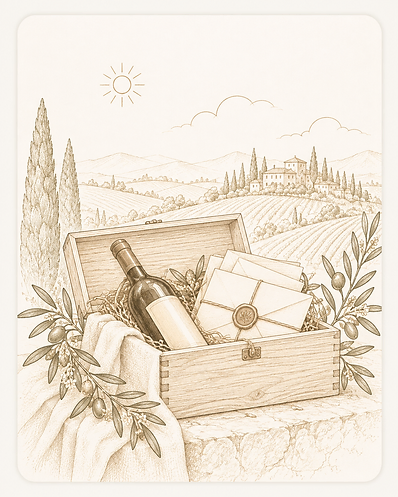
Before the wedding, each partner writes a private letter. During the ceremony the letters are sealed inside a wooden box, often with a bottle of wine, to be opened on a chosen anniversary. It creates a beautiful keepsake without slowing the ceremony down.
Olive Tree Ceremony
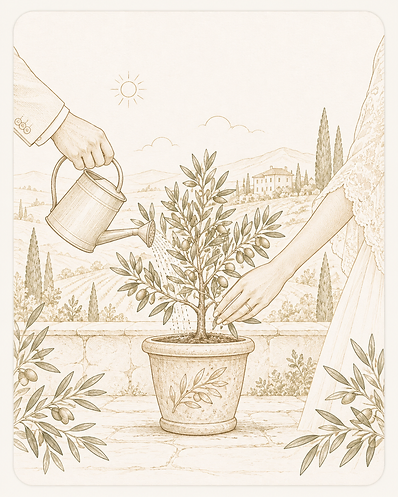
The couple adds soil or water to a young olive tree or another plant that they can keep after the wedding. An olive tree is especially appropriate in Italy, where it naturally suggests continuity, peace and roots. For destination weddings, watering an already-potted tree is usually much more practical than actually planting one during the ceremony.
Ring Warming
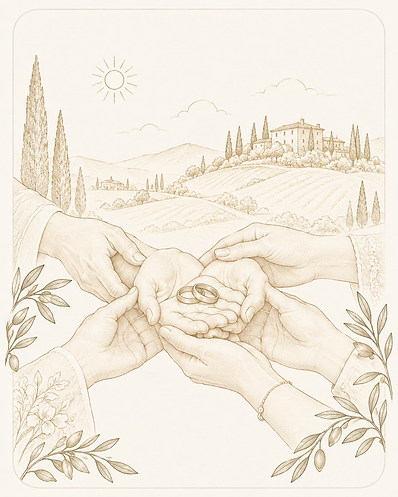
Before the ring exchange, the wedding rings are passed among close family and guests, who hold them for a moment and silently offer a wish or blessing. It is one of the most natural ways to involve guests without asking anyone to speak. For larger weddings, I usually keep it to the first rows or selected family members so the rings return on time.
Sand Ceremony
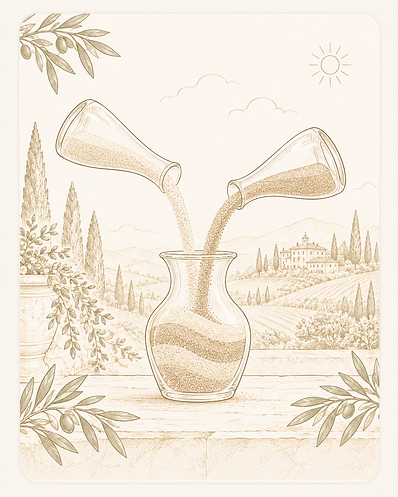
Each partner pours sand from a separate vessel into one shared container. The layers can no longer be completely separated, making the symbolism immediately understandable. It also works beautifully for blended families because children can each add their own layer.
Unity Candle
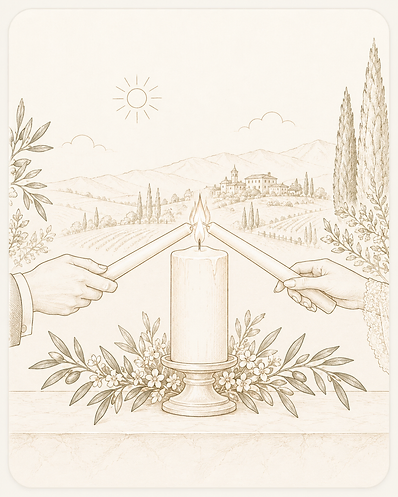
Two flames are used to light one central candle, sometimes with parents lighting the first candles. It remains simple and elegant, but in Italy it works best indoors or in a very sheltered setting. Open terraces, gardens and hilltop venues can be surprisingly windy.
Blessing Stones
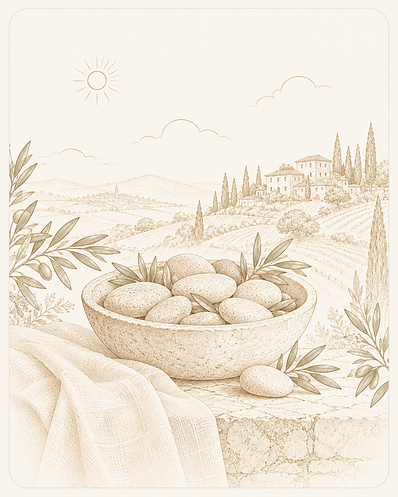
Guests are given a small stone or pebble and invited to hold it while making a silent wish for the couple. The stones are then collected in a bowl or vessel that the couple can keep. This suits intimate outdoor ceremonies particularly well and can involve everyone without turning the ceremony into a performance.
Marriage Time Capsule
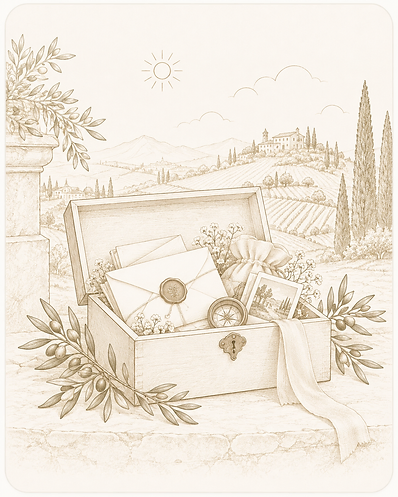
Letters, photographs, small keepsakes or notes are placed into a box and sealed during the ceremony, to be opened on a future anniversary. It is similar to a wine box but gives the couple more freedom to include objects from their relationship and wedding day.
Family or Children's Ritual
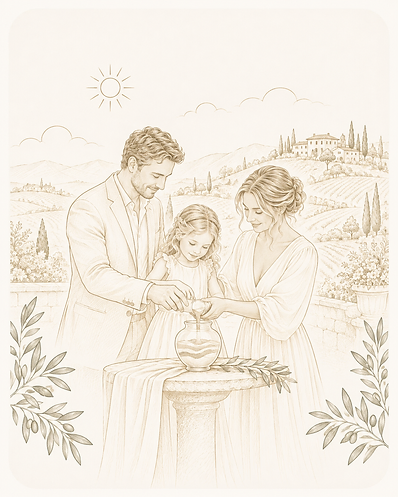
When children are part of the marriage, they can join a short shared promise, add a ribbon to a handfasting, contribute sand to a family vessel or take part in another simple gesture. The important thing is that it feels like an acknowledgement of the family becoming closer - not like the children are being asked to perform.
Shared Italian Toast
Instead of blending wine, the couple can share a small glass of something personally meaningful - wine, prosecco, limoncello or even a favourite non-alcoholic drink. This is not an ancient Italian wedding tradition, and I would never present it as one. It is simply a modern symbolic moment that can feel very natural at an Italian destination wedding when it connects to the couple's story.
Rose Ceremony
The couple exchange a single rose, or offer roses to their mothers or family members during the ceremony. A rose is a simple, universally understood gesture of love and gratitude. It works particularly well when you want to honour family members or create a quiet, visual moment of giving within the ceremony.
The ones I usually leave out
Some unity ideas are fun online but rarely improve an elegant ceremony in Italy. Making food during the ceremony, sawing through a log, lighting a bonfire, doing shots, painting a canvas or adding elaborate craft activities can easily interrupt the emotional flow. That does not mean they are wrong. If something is genuinely part of your story, we can make almost anything work. But I would never add an unusual ritual simply for novelty. The ceremony should still feel like a wedding, not a sequence of activities.
How to choose the ritual that actually fits you
Start with the meaning rather than the prop. Do you want to represent two lives coming together? Involve your families? Remember people who cannot be there? Create something to keep after the wedding? Honour your culture? Once the reason is clear, choosing the ritual becomes much easier. Handfasting works when the symbolism of commitment matters. Ring warming works when guests and family are central. A wine box works when you want something private to return to in the future. An olive tree works beautifully when place, roots and continuity are part of the story.
Practical things to think about in an Italian venue
Italy gives us extraordinary ceremony settings, but the location affects what works. Before choosing a ritual, I always think about a few practical details: • Wind - especially for candles, paper, ribbons and sand. • Heat - candles and delicate props can behave differently during a July or August ceremony. • Transport - destination couples need to decide who brings the box, vessel, ribbons, tree or other objects to Italy. • Setup - your planner, venue or celebrant should know exactly where everything will be placed before guests arrive. • Timing - most rituals should take around two to five minutes and should not interrupt the natural rhythm of the ceremony. These details sound small, but they are what make the ritual feel effortless on the day.
Where should the ritual happen in the ceremony?
There is no compulsory position. Most rituals work naturally after the personal vows or ring exchange, when the ceremony has already reached its emotional centre. A ring warming obviously begins earlier because the rings need time to move through the guests. A family ritual may sit before the vows. A shared toast can work beautifully just before the final pronouncement. I place the ritual where it makes sense in the story of the ceremony rather than following a fixed template.
Let's design yours together
You do not need to arrive with a ritual already chosen. During the ceremony design process, I can suggest the options that fit your personalities, families, venue and the atmosphere you want to create. Sometimes the right answer is handfasting or a wine box. Sometimes it is something completely personal that does not appear on any list. The ritual should feel like it belongs to the two of you. Everything else comes after that. You can also see how these moments fit into a full symbolic ceremony structure or explore symbolic weddings in Italy.