
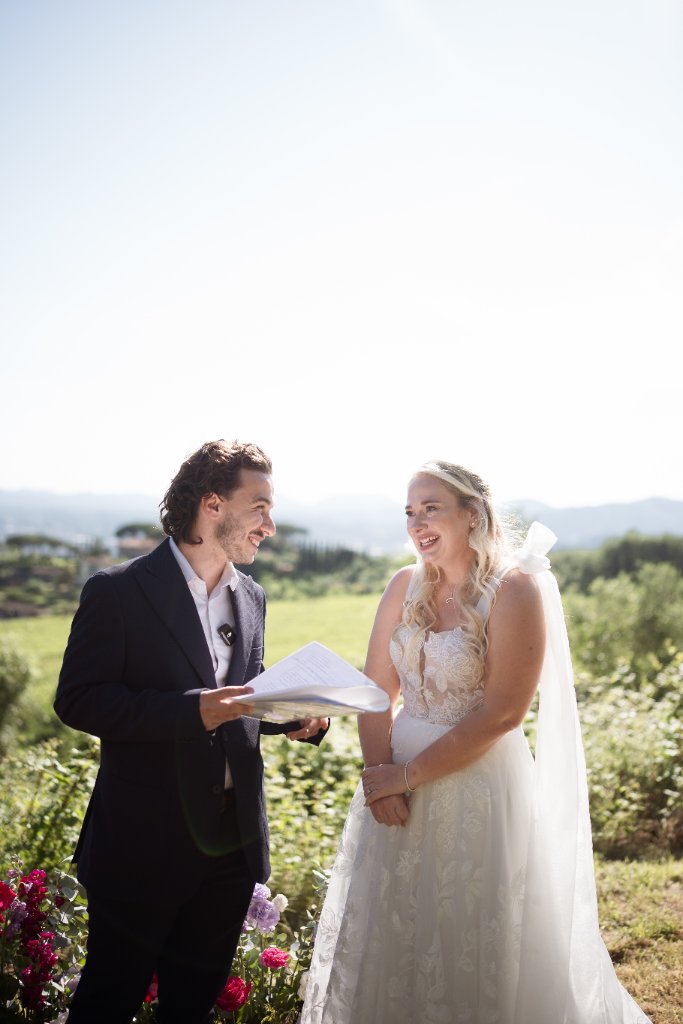

First, a reassurance
Thousands of international couples marry in Italy every year, most of them living somewhere else while they plan. You do not need to speak Italian, live here, or navigate the bureaucracy alone. With the right handful of people around you, a planner, a venue, a celebrant, and where needed a legal path, it becomes genuinely enjoyable rather than stressful.
The one decision that unlocks everything else
Before dates, before venues, decide what kind of ceremony you want: a symbolic ceremony with broad freedom over location and structure, or a legally binding civil route that follows the requirements of the relevant comune. This single choice shapes your venue options, paperwork, and timeline. If you're weighing it up, the symbolic-versus-civil comparison lays out the trade-offs plainly. Many international couples choose to handle the legal marriage separately and hold a fully personal symbolic ceremony in Italy.
A realistic planning timeline
12+ months out: choose your region and rough date. Italy's regions differ sharply in feel, cost and season. 9–12 months out: book your venue and, if you want one, your wedding planner. 6–9 months out: secure your celebrant, photographer, and any must-have suppliers, while the ceremony can still shape the schedule. 3–6 months out: guest logistics, save-the-dates, travel and accommodation. Begin the real work on your ceremony: story, readings, ritual and vows. The final weeks: confirm the running order, numbers and timings, and rehearse the ceremony with me, in person or by video.
Who to book, and roughly in what order
A sensible order for most international couples: 1. Venue, since it dictates guest count, date flexibility, and budget 2. Wedding planner, if using one, to coordinate everything that follows 3. Photographer and videographer, as the best ones book out furthest in advance 4. Celebrant, ideally by the 6–9 month mark so the ceremony gets proper attention 5. Music, flowers, and styling, once the ceremony's tone and structure are settled This order isn't rigid, but booking your celebrant too late is one of the most common regrets I hear from couples looking back on their day.
Where the celebrant fits, and when to bring one in
Couples often book the celebrant last, and often regret it. The ceremony is the reason everyone has flown in, yet it's the piece most likely to be rushed at the end. Bring your celebrant in around the 6–9 month mark: early enough to design something real and coordinate timings with your venue and planner. If you've already settled on a symbolic ceremony, the guide to organising it walks through those specifics step by step.
The legal question, kept simple
You have two main routes. Complete the legal marriage in your home country under the rules that apply there and use the Italian ceremony as the celebration, or marry legally in Italy through the civil process that applies to your nationality, circumstances, and chosen comune. Where a couple needs their civil formalities handled in Italy, there is a dedicated path for official interpretation and documentation, which is worth reading before you decide.
Common mistakes to avoid
A few pitfalls I see repeatedly with couples planning from abroad: • Booking a venue before confirming guest travel logistics and peak season pricing • Leaving the celebrant and ceremony design until the final few months • Assuming a symbolic ceremony is legally binding, and skipping the civil paperwork at home • Underestimating summer heat or wind for outdoor ceremonies in July and August Each of these is easy to avoid once you know to look out for it, which is really the point of planning ahead.
A calmer way to begin
You don't have to solve all of this today. Choose your region, choose your kind of ceremony, and the rest falls into a sensible order. When you're ready to talk through where your ceremony fits, I'm happy to help you think it through, long before you've booked a thing.