The beauty of a symbolic wedding in Italy
A symbolic wedding in Italy gives you wide freedom over where and how the ceremony takes place: a clifftop, a vineyard, a rooftop terrace, or a private garden, subject to the venue and any local event rules that apply. Because there is no Italian civil-marriage paperwork attached to the symbolic ceremony itself, you can focus on the celebration and the words that matter most. This guide walks through every step, from choosing your location to the moment you say your vows, so you know what to expect and in what order to make each decision.
Step 1: Choose your location and venue
Italy offers an extraordinary range of settings: the rolling vineyards of Tuscany, the grand villas of Lake Como, the canals of Venice, the cliffs of the Amalfi Coast, and the baroque towns of Sicily. Each region has its own character, season, and logistics. Start by thinking about the feeling you want. Do you imagine a sun-drenched countryside ceremony, an elegant lakeside celebration, or an intimate city elopement? Then consider practicalities: • How easy is it for your guests to travel there? • What time of year suits your ideal weather and light? • What kind of venue fits your guest count: a villa, a hotel, or a private estate? A wedding planner who specializes in Italy can help you narrow this down quickly, but many couples also work it out on their own with a shortlist of two or three regions.
Step 2: Handle the legal paperwork at home
Because a symbolic ceremony is not legally binding, many couples complete the legal marriage in their home country before or after travelling to Italy, following the rules that apply there. Others choose a legal civil marriage in Italy and keep the symbolic ceremony separate. Handling the legal registration separately means the Italian symbolic ceremony can stay focused on the celebration. If you want the legal marriage to take place in Italy instead, confirm the requirements for your nationality, circumstances, and chosen comune early in the planning process.
Step 3: Find your celebrant and start designing
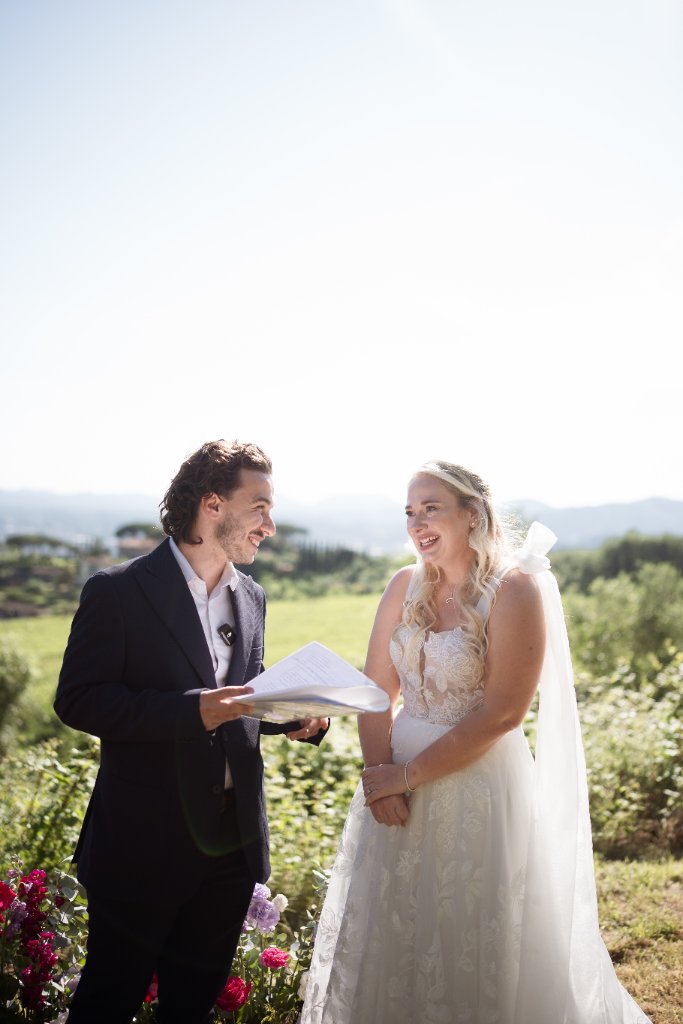
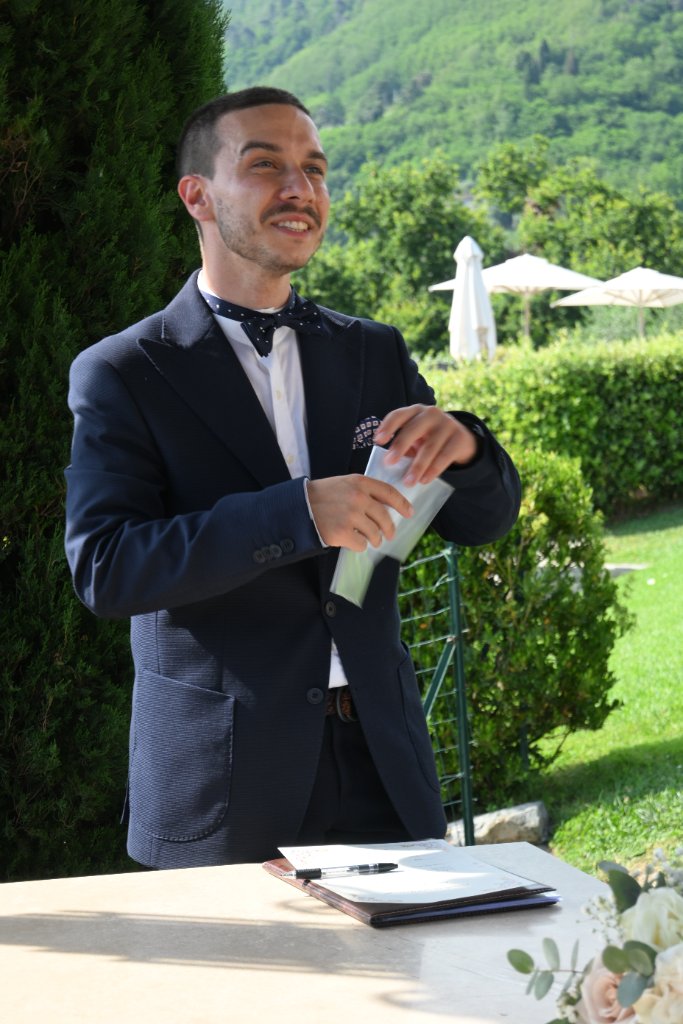
Your celebrant is the person who writes and delivers your ceremony, so this is a decision worth making carefully. Look for someone who writes every ceremony from scratch, communicates warmly and clearly, and takes the time to learn your story, rather than someone who recycles a template. Once you've chosen your celebrant, the process usually begins with a discovery call and a written questionnaire. This is where I learn how you met, what you value, what you want your ceremony to feel like, and any traditions or rituals you'd like to include. From there, I design a ceremony structure and write a full draft script, which we refine together until it feels exactly right, usually over two or three rounds of feedback.
Step 4: Build your ceremony
A symbolic ceremony can include anything you want. Here are the elements most couples include: • A warm welcome that sets the tone and acknowledges your guests • Your love story, woven naturally into the ceremony • Personalized vows (yours, mine, or written together) • A ring exchange and any symbolic rituals, such as handfasting, a sand ceremony, or a unity candle • Readings or blessings from family and friends • Music moments: processional, a signing song, and recessional • A closing and pronouncement that sends you off as a married couple Nothing is required, and nothing is off-limits. The ceremony can be 20 minutes or 45 minutes, solemn or joyful, traditional or entirely unconventional. It's yours to shape from the ground up.
Step 5: Plan the logistics
With your venue, celebrant, and ceremony design in place, the remaining logistics are about the flow of the day. Coordinate with your planner or venue on timing: when guests arrive, when the ceremony starts, how long it lasts, and how you transition into the reception. Think about sound (a microphone for larger venues), shade for outdoor ceremonies in summer, and a backup plan if weather is a concern. Your celebrant should coordinate with your planner and venue on access, setup, and timing well before the day itself. On the day, I arrive early, check the setup, and make sure everything is in place so that when the moment comes, you can simply be present and say your words.
What to include to make the ceremony feel truly yours
The ceremonies couples remember most are the ones that felt personal down to the smallest detail. Include the details that only you would think of: a reading from a grandparent's letter, a ritual from your family's tradition, or a moment of silence for someone who can't be there. These small choices are what make a ceremony yours rather than anyone else's. If you're not sure where to start, that's exactly what the discovery call is for. I'll ask the right questions and help you find the elements that feel true to you, then weave them into a script that sounds like you on your best day.