

What 'elopement' means today
An elopement, today, is not running away — it's a private ceremony held by the two of you (sometimes with a few close people), designed around what you actually want rather than around what a larger wedding requires. The old meaning has softened entirely: many couples who elope to Italy are simply choosing intent over scale, a wedding that belongs to the two of them above anyone else.
Why couples elope to Italy
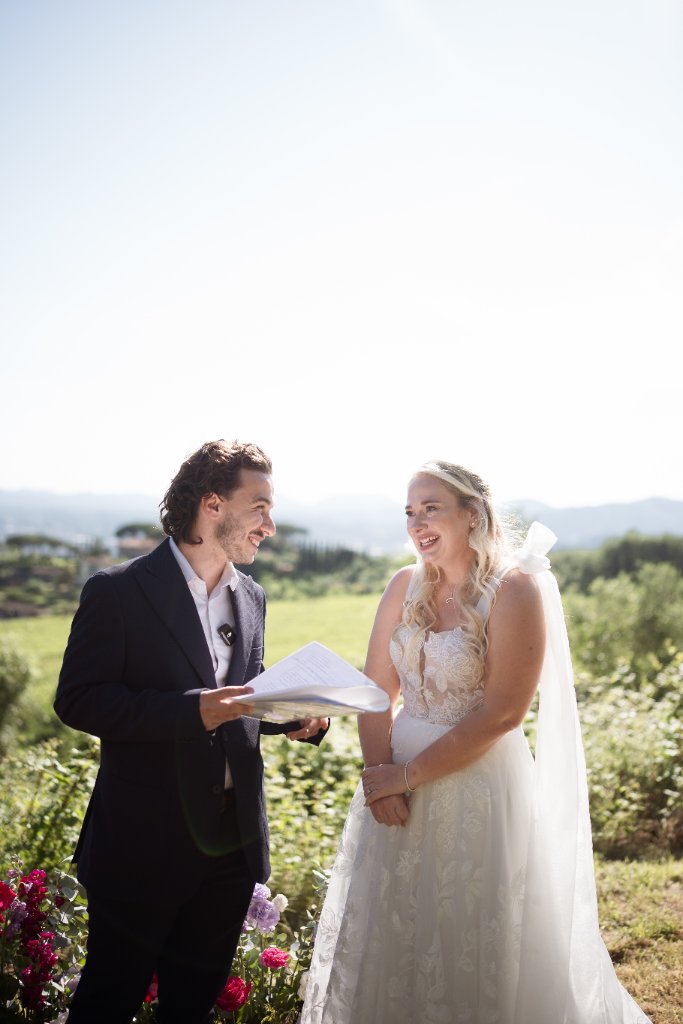
Italy rewards a small ceremony. Without a bus of guests to coordinate, you can hold the ceremony at the hour the light is best, stay long afterwards for photographs, and laugh your way through dinner without a seating plan to manage. The countryside is built for two - villa gardens, terraces, and tiny piazzas sized for a quiet vow exchange.
How to elope in Italy - step by step
1. Decide whether the ceremony will be legal or symbolic. This determines whether Italian marriage paperwork is part of the plan. 2. Choose the region before the venue. Tuscany, Lake Como, the Amalfi Coast, Sicily, Venice, and Rome offer very different experiences. 3. Choose a venue or ceremony location that works at small scale. You do not need a ballroom for two people. 4. Book the people who shape the day. For most elopements that means a celebrant and photographer first, then hair and makeup, flowers, music, or planning support only if you want them. 5. Build the ceremony. Your story, vows, rings, one reading or ritual if it adds something, and a clear beginning and ending. 6. Build the rest of the day around the light rather than a traditional wedding schedule. With no large guest list, you can be much more flexible.
Legal or symbolic elopement in Italy?
A symbolic elopement is the simplest route for international couples because there is no Italian marriage paperwork attached to the ceremony itself. You can complete the legal marriage at home and use the Italian day for the vows and experience. A legally binding elopement in Italy is also possible, but the civil requirements depend on your nationality, circumstances, and the comune involved. If legal registration in Italy matters to you, confirm the current process before building the rest of the trip around it. The symbolic vs civil wedding guide explains the difference in more detail.
Where to elope in Italy
Tuscan hills. A vineyard terrace or stone farmhouse, midweek and out of season for the quietest versions. Lake Como. The water does most of the work — a villa promenade at golden hour is unforgettable. The Amalfi Coast. A clifftop ceremony and a long lunch below; complicated access, so worth doing with someone who knows the steps. A quiet town. Almost any Italian town has a small piazza or church square that, midweek morning, is essentially yours.
What an elopement ceremony includes
An elopement with me is a full ceremony, simply scaled down - written and structured like a wedding, not a registration. Your story, personal vows, a small ritual if you'd like one, and a quiet pronouncement are usually enough. A photographer is the most common addition. Witnesses are not required for a symbolic ceremony, while a legal civil marriage follows its own requirements.
What vendors do you actually need for an Italian elopement?
The useful list is much shorter than for a full destination wedding. A celebrant gives the ceremony its structure and words. A photographer documents the day and helps you make use of the location. After that, add only what improves the experience for you: hair and makeup, a small bouquet, live music, a driver, or a planner if the location or logistics are complicated. Small does not have to mean stripped back, but every supplier should have a clear reason to be there.
How much does it cost to elope in Italy?
There is no single Italy elopement price because the biggest variables are the region, venue, travel, photography, accommodation, and how much of the day you want professionally planned. A two-person symbolic ceremony can stay very lean, while a private villa, boat, photographer, styling, dinner, and several nights of accommodation can turn it into a luxury trip. For the ceremony side specifically, see my celebrant pricing in Italy.
Best time of year to elope in Italy
For most regions, May, June, September, and early October give you the best balance of outdoor weather and usable light. July and August can work, but heat and crowds matter more, especially in cities and on the Amalfi Coast. Winter suits city elopements and indoor venues better than lakeside or countryside ceremonies. The month-by-month Italy wedding guide goes into the regional differences.
A simple Italy elopement day
A relaxed version might look like this: slow morning, getting ready, late-afternoon ceremony, portraits while the light softens, then dinner somewhere you genuinely want to eat. No receiving line, no seating chart, no long gap while guests move between locations. If Tuscany is the region you are leaning toward, the Tuscany elopement guide gets much more specific about places and timing.
Do you need witnesses or paperwork?
A symbolic elopement has no Italian civil-marriage paperwork or legal witness requirement attached to the ceremony itself. If you want the marriage to be legally binding in Italy, the civil requirements depend on your nationality, circumstances, and the comune involved. Many couples instead handle the legal marriage separately and keep the Italian day entirely for the ceremony and experience.
Let's plan your elopement
The most relaxed elopements I've been part of happened because we kept the planning small. Whether you're leaning toward the Tuscan hills or the Amalfi cliffs, I'll shape a ceremony sized for the two of you. Tell me the season you're imagining and we'll start there.