
Why most vows sound the same, and how to avoid it
Search "wedding vow examples" and you'll find the same handful of phrases recycled endlessly: promises to cherish, to hold, to be your best friend forever. None of it is wrong, exactly, but none of it is you either. Guests can tell the difference between vows that were written and vows that were assembled from a template, and so can your partner. The good news is that writing vows that sound like you doesn't require being a writer. It requires a bit of structure, a handful of honest questions, and the willingness to say something specific instead of something safe. That's what this guide walks through.
Start with one story, not a list
The instinct when writing vows is to list qualities you love: kind, funny, patient, generous. Lists like this feel true but land flat, because they could describe almost anyone. Instead, pick a single specific memory that captures why you're marrying this person. The morning they made you coffee without being asked during a terrible week. The way they argued your case to a stranger on your behalf. One vivid, concrete moment says more than ten adjectives, because it shows rather than tells, and it's the kind of detail no one else could have written.
Write how you talk
If you'd never say "henceforth" or "I do solemnly vow" out loud in a normal conversation, don't write it into your vows. The best vows sound like a warmer, clearer version of your everyday voice, not a legal document or a greeting card. A simple test: read your draft aloud, ideally to yourself in a room alone, and notice where you stumble or where it feels stiff. Those are almost always the lines borrowed from somewhere else rather than written in your own words. Cut them or rewrite them until the whole thing sounds like something you'd actually say. If your vows cross two languages, the bilingual wedding ceremony guide has more on shaping vows that sound natural in both.
Promise something concrete
Vague promises are easy to write and easy to forget: "I'll always be there for you," "I'll always support your dreams." They're true, but they're generic enough to appear in almost any ceremony. Trade them for specific, personal ones instead. "I promise to always let you have the last slice." "I promise to never let you drive when you're this tired." "I promise to keep pretending I don't know how your magic trick works." Concrete promises are more memorable, more often quoted back to you years later, and more truthful to the actual texture of your relationship than any abstract pledge could be.
Use a simple structure to get started
A blank page is the hardest part. A simple four-part structure makes it much easier to begin: 1. An opening line that sets the tone, serious, funny, or both 2. A memory or moment that shows why you fell for them 3. Two or three specific promises for the years ahead 4. A closing line that looks forward to your life together You don't need to follow this rigidly, but having a shape to fill in beats staring at nothing. Most first drafts come together in under an hour once the structure is in place.
Keep it short
Sixty to ninety seconds is plenty for most ceremonies, roughly 150 to 200 words. It's easier to deliver without losing your composure, easier for guests to absorb emotionally, and it forces you to keep only the lines that matter most rather than padding with filler. If your draft runs long, read it aloud and mark the lines that made you feel something. Keep those. Cut the rest, even if they took the longest to write. Vows are one place where less genuinely is more.
Should you write together or separately?
Most couples write separately and keep their vows a surprise until the ceremony itself, which is part of what makes the moment land. If you'd rather write together, that works too, especially for couples who want a matching tone or shared promises. A middle path some couples choose: agree on a shared structure or a few themes in advance (so neither vow feels wildly mismatched in length or tone), then write the actual words independently. This keeps the surprise while avoiding one vow being three sentences and the other three pages.
What if you get emotional while delivering them?
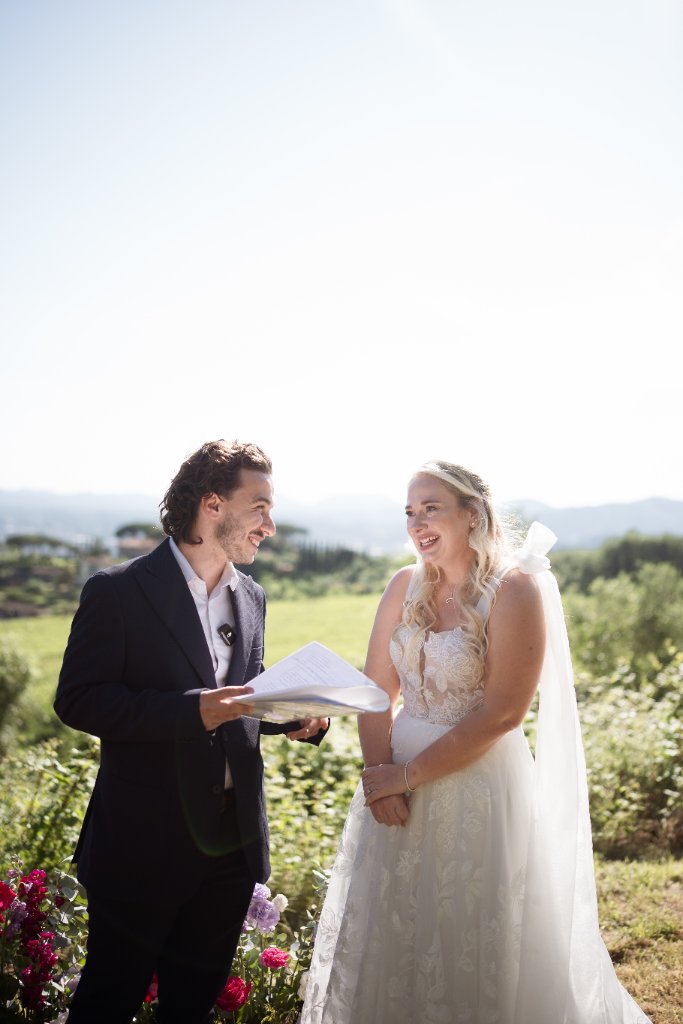
You probably will, and that's fine. A short pause is far more powerful than rushing through to avoid tears. I always let couples know in advance that pausing is expected and welcome, not a mistake to recover from. A practical trick: print your vows in a larger font on a single card, and keep a spare copy with your celebrant or a bridesmaid or best man just in case. If your voice catches, take a breath, take a sip of water if one's nearby, and continue when you're ready. No one is timing you.